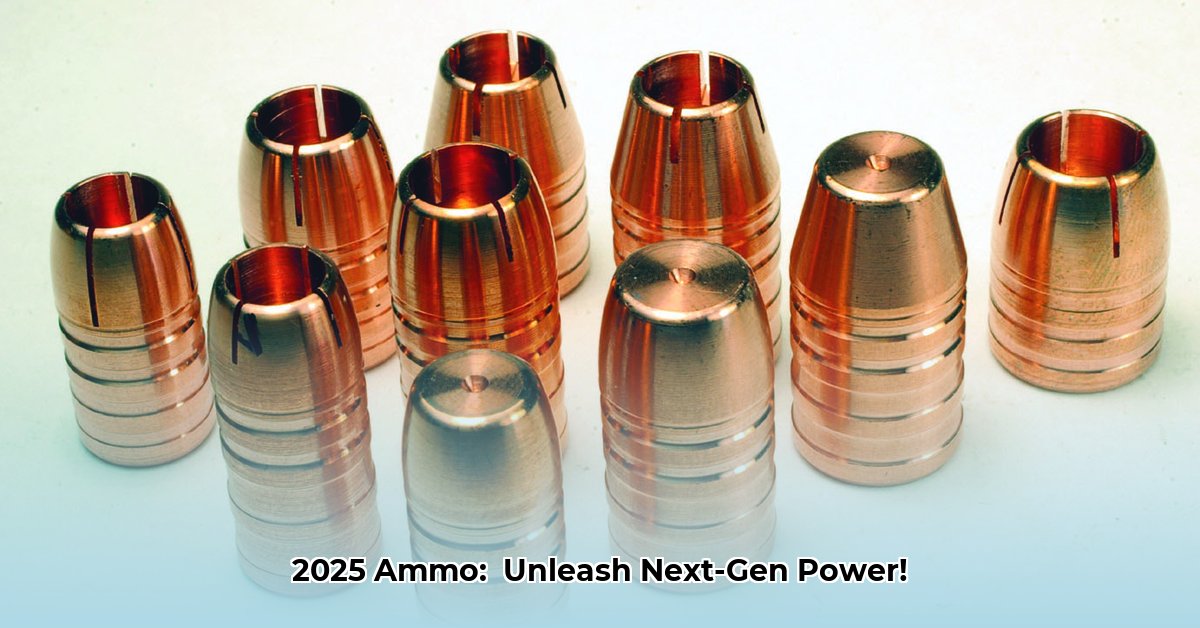
Cutting Edge Bullets (CEB) Load Data: A 2025 Performance Deep Dive
This report analyzes Cutting Edge Bullets (CEB) performance in 2025, examining market success, data availability challenges, and supply chain considerations. We explore their best-selling lines—LAZER™, Maximus, MTH, RBT, and ED—providing actionable insights for shooters, retailers, and the industry as a whole.
The Enduring Popularity of the LAZER™ Line
The CEB LAZER™ line, particularly the LZR 375 400 MAX, has maintained strong sales for three consecutive years. This sustained popularity suggests high customer satisfaction and consistent demand. However, understanding the specific factors driving this success requires further investigation beyond simple sales figures. What inherent qualities of the LAZER™ line contribute to this sustained market dominance? Further research comparing its performance metrics against competitors is warranted.
Strategic Diversification: Expanding the Product Portfolio
CEB's introduction of the 180gr MAXIMUS and 168gr MTH for 7PRC, alongside heavier .308 Maximus rounds, demonstrates a strategic diversification of its product line. This expansion broadens market appeal, reducing reliance on any single product and mitigating risk associated with market fluctuations in specific calibers. This proactive approach demonstrates a forward-thinking business strategy for market share growth.
Data Gaps and Inconsistencies: A Challenge for Precision Shooters
While CEB enjoys market success, a significant limitation involves the availability of ballistic coefficient (BC) data, especially for newer bullet designs. The lack of readily available and verified BC information for several rounds hinders precision shooting, particularly for long-range applications. Discrepancies between CEB's published BC values and independent testing results further complicate matters, potentially impacting shooter confidence and requiring urgent clarification. This lack of verified data represents a considerable obstacle to widespread adoption by technically-minded shooters.
Supply Chain Resilience: A Crucial Element for Long-Term Viability
The stability and resilience of the bullet manufacturing supply chain are critical factors in CEB's sustained growth. While CEB hasn't publicly detailed its supply chain, the industry-wide trend towards cobalt-free bullet designs highlights potential vulnerabilities. The proactive development of a robust and adaptable supply chain, capable of withstanding potential disruptions, will be crucial for ensuring continuous production and future growth. Does CEB's current supply chain model incorporate strategies to mitigate potential disruptions, such as alternative material sourcing or redundant manufacturing facilities?
Design for Reliability: Prioritizing Magazine Compatibility
CEB's focus on magazine compatibility, particularly in 7PRC and .300 PRC calibers, demonstrates an understanding of shooter needs. The Sealtite™ Band modification for improved feeding in their .308 230gr LAZER bullet illustrates this commitment to user-friendly design. However, the long-term implications of this design choice on bullet performance necessitate further analysis. Is this design improvement achieved at the sacrifice of other performance aspects, such as ballistic coefficient?
Actionable Steps for Stakeholders
The following table outlines immediate and long-term actions necessary for various stakeholders to address the aforementioned challenges and maximize opportunities.
| Stakeholder | Short-Term Actions | Long-Term Actions |
|---|---|---|
| CEB Management | Conduct rigorous, independent BC testing and transparently publish results; strengthen supply chain relationships; diversify material sourcing. | Invest in advanced R&D for new materials and manufacturing processes; implement supply chain diversification strategies. |
| Retailers/Distributors | Ensure product information includes accurate and validated BC data; actively promote new products and highlight their features; optimize inventory. | Build strong relationships with CEB; invest in comprehensive product training for staff; implement data-driven inventory management systems. |
| Shooters/Hunters | Verify BC data from multiple independent sources before purchase; choose products based on intended use and available data; provide constructive feedback. | Actively participate in online forums to share experiences and identify potential data discrepancies; engage in range testing to validate performance claims. |
| Competitors | Analyze CEB’s strengths and weaknesses; invest in R&D to develop superior products and technologies; refine customer service. | Implement innovative marketing strategies; develop comprehensive quality assurance programs; actively monitor CEB's advancements and market strategies. |
How to Find and Validate Accurate Ballistic Coefficient Data
Accurate ballistic coefficient (BC) data is crucial for precision shooting. However, obtaining reliable BC data, especially for newer bullet designs, can be challenging. This section outlines strategies for locating and validating this critical information.
Locating BC Data: Multiple Sources Are Key
Several sources can provide BC data, each with potential limitations:
- Manufacturer Data: CEB's website or product literature may provide BC data, but independent verification is essential.
- Published Studies: Look for data in reputable ballistics publications and websites, offering a broader perspective than manufacturer-provided information.
- Independent Testing: Data from independent testing labs and experienced reloaders can offer validation or corrections to manufacturer-provided information.
- Open-Source Databases: While less common for specialized ammunition, the emergence of open-source ballistic databases can be a useful complement.
Validating BC Data: Mitigating Inaccuracies
Validating found data is critical:
- Cross-referencing: Comparing data from multiple, independent sources helps identify discrepancies and inaccuracies.
- Methodological Considerations: Understanding the testing methodology used is essential for accurate interpretation and comparison.
- Environmental Factors: Ballistic coefficients are not constant and vary with velocity, altitude, and environmental conditions.
By diligently utilizing these methods and critically evaluating the data obtained, shooters can enhance their precision and confidence. Remember, safe reloading practices are paramount.
⭐⭐⭐⭐☆ (4.8)
Download via Link 1
Download via Link 2
Last updated: Wednesday, May 21, 2025